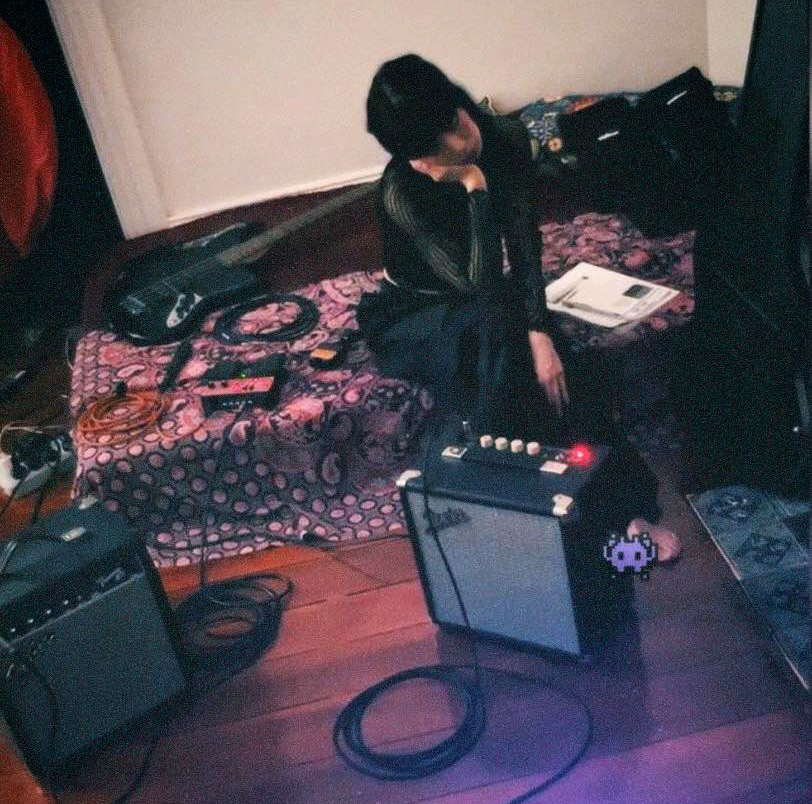
“I think that ethos is important and that’s why we can still have underground scenes. […] Supporting the underground is important. It’s the beating heart of most if not all mainstream or at least commercialised creativity. The ideas we see being put on TV or any medium with a mass audience, it still comes from the underground.”
Cyllan Wednesday of Sydney, Australia threw herself into the underground music scene with the help of the internet to aid her rebellious spirit, dissatisfied with local offerings. She shares wisdom with me from the self-reliant pursuit that led to the founding of Weisskalt Records. Though she herself is an accomplished, multi-talented independent musician with deep roots in the underground music scene, Cyllan began our discussion this way:
C: I really do appreciate you carving out time, especially since I had a look at your profile and the projects you’re involved in. You’re a very impressive individual with a diverse scope. I respect you taking the time out to write music journalism. We actually need better writers.
M: Wow. Oh, I appreciate that. Likewise with you. I want this interview to highlight the importance of independent and underground work. I’m sure we probably agree on why that’s important. I suspect we’re likeminded in that way and I respect anybody else who wants to do anything creative with their time.
C: Definitely. I do love what’s popular, in your face and over-processed by a big team patroned with a sizeable budget. But the cutting edge and raw ideas, the works that genuinely challenge, are from the underground sphere, people doing it themselves from extreme grassroots; in your garage, bedroom, on the street. I harbor the gripe with how dominant cultures habitually co-opt ideas from the underground or youth culture but intentionally avoid crediting them correctly.
M: I share the gripe. It’s something I’ve observed as well.
C: On the basis of ethics, I feel a sense of duty to support underground scenes, no matter where it’s from. Give credit where credit is due.
M: I think that’s great. That is one of the hearts of the underground, if not the main artery, if you will, that spirit of wanting to be ethical, wanting to credit people, remembering people are humans before they’re artists, putting feelings first. I completely agree with that. And I also find it interesting that you bring up fashion because I was wondering about your earliest inspiring memory, something that was formative to your style.
C: One memory is being three or four years old when I was given pens to draw with on large sheets of paper. Instead of drawing on paper, I took a pen, ran under the kitchen table in my house and graffitied all over the wall.
M: That’s so cool.
C: After I did that, I ran away and hid because I knew that was gonna get me in trouble. I did get in trouble. But after I got yelled at for graffitiing the wall, I did it again. Straight away. It’s the common experience of humans being impulsive and not doing what they’re expected to.
My earliest clear memory of listening to music is folk music for children on analog tape. My first introduction to playing music was when I was four or five. I started with piano but because I moved houses a lot, I stopped for one or two years. I resumed formally when I was seven, in classical and jazz piano music. [Cyllan, as if recalling the paper in front of her as we speak, begins describing a memory of how elementary sheet music is presented]
With folk music for children, one of the earliest stories I remember was the treble clef depicted as an entwined phoenix, unfurling to carry children across the sky. Folk music is the heart and beginning of all music and dance.
M: That’s fantastic. So your parents may have supported the music but not the drawing on the walls. How did you find your first tapes?
C: My artist mother gave me those tapes. She was trying to keep me preoccupied but was against the idea of me watching TV or being “passive”. I was put in this playpen of toys and I had cassette tapes to listen to as well. Their impression on me was indelible. I don’t perform folk music in public but I compose folk songs for my rabbits.
M: I think that’s so cool.
C: When you turn 10 give or take a few years, your critiquing of the world around you becomes more conscious, sharp. And that’s when you start gravitating towards music that’s subversive or intriguing. My musical training was pure classical and jazz. But around 10, I was introduced to sound art and by the time I was 13 to 14, I discovered heavy metal and gothic music. The leap between classical and metal is not far apart.
The precursor to sound art is awareness of every single object, person, place, thing, emanating its own musicality; rhythm, melody, texture and so on. This exists with, within and without us and it comes down to whether we are open or quiet enough to receive that.
M: Did you find that you were involved in a lot of different local scenes or were you more prone to listening to music in headphones? Were you going to shows? Was your music enjoyment more solo or in groups?
C: Up until I turned 16, 80% of the music I was listening to or participating in was just me practicing. I recorded on tape and then played it back to myself to catch all the errors.
With local music, as a teenager I found most of it wasn’t what I was interested in. I’m lucky to be a part of the internet generation so there’s no geographical limitation. I found troves of startling music you can only find through online networks. As an adult I’ve since come across some local talented creatives but they are often self-effacing, therefore hidden.

M: Did that inspire you to want to put your music out there and put your stamp on the scene?
C: It inspired me to become actively open to lo-fi expressions and now lo-fi feels natural and aesthetic. This led me to play freeform experimental, noise, ethereal music, all centered around my JUNO DS88 synthesizer with an effects driven approach. I use the voice as an instrument, as a soundscape. I’ve got this looping pedal where I loop my voice into multiple layers, real-time.
M: I think that sounds fantastic. That sounds like a lot of artists that I love to listen to and I love how it sounds like you’re pushing the boundaries in that way. How old were you when you started performing?
C: 10 or something. But that’s formal performances like recitals and exams. For underground shows, I would have been around 14.
M: Did you find it was difficult to get on stage or that you really enjoyed it? How was it for you performing?
C: I find waiting prior to performing is the hard part because your mind wanders and you worry about wasting people’s time. Because when people specifically come to see you play, you respect their time. I have anxiety about not gratuitously occupying space. But once I get past this initial tension, none of it matters because I’m in the moment. There is an ecstasy to having my entire being viscerally connected to my instrument and expressing that with precision. If I make a mistake, I learn from it. Sometimes the mistake is magic in disguise.
I love playing music. I’m thankful when people are interested but I would be playing music no matter what. I’m comfortable with the idea of playing to a full audience, but also to a room that’s totally empty.
M: I love your spirit and how open it is to acceptance of changing circumstances, as long as music is the constant. I’m wondering what was the earliest struggle that you faced in your creative pursuit? It sounds like maybe you had to get over a few humps to get to the place you’re at now.
C: It takes a long time to sound like yourself. Even now, I still don’t sound like myself. There are always more technical skills and knowledge to master.
There are some songs I’ve come across where there might be an odd noise at the 3:33 minute mark. It sounds perfect that way and I’ll feel, “how did this person know to put that subtle detail in, in that specific moment?” That’s a point of intrigue.
M: There’s a lot of importance in admiring other music and I love where you’re coming from, that this was your answer to a question about struggle. It sounds like you are aided so much in appreciation for other bands. I’m wondering why you said that you don’t have the technical skill that you want yet. Is it because of time? What do you think?
C: The core obstacle is there is never enough time. The second is accepting the repetition that comes with discipline, so playing the same motion over and over again until it’s fluid. The third is working with injury or illness. For example, I have long-term tendonitis in my left wrist which has changed my playing style. But this has opened up new possibilities so now it’s transmuting a limitation into a different kind of expression.
To be good at music, you do have to listen to and be completely open to the entirety of music.
M: I agree. You can be surprised by what you find value in and to what you find yourself connecting. I just recently got into Sardinian folk music. It’s great.
C: I really have to introduce myself to some of it because that sounds unusual.
M: Yes, it’s so amazing. There are always four singers. They’re all male. It’s a pastoral bonding activity. It’s fantastic. But I wonder if that same desire to spend as much time with music as possible is what led you to Weisskalt records?
C: Yeah. I founded that label in 2018 without having any understanding of how labels work.
M: I love the ambition.


C: It’s super underground. I feel like some guy hiding in my basement working on spreadsheets half the time.
With the label, we are trying to maintain the intersection and balance between the commercial and non-commercial world. That is, we present music that has commercial activity but simultaneously aim to hold the space for other music that is unlikely to ever be heard on mainstream radio.
For example, we have 3 albums by The Telescopes from the UK in our catalog. They are a professional, international recording artist, performer, songwriter, arranger and producer who have achieved mainstream success whenever they have pursued it with 16 albums on various labels big and small. But, we have also guest featured Hybryds from Belgium who have resolutely remained underground for decades and intentionally operate on the edges of anonymity.
We also observe music evolving. Special Cases from Chile has 6 albums, 2 of which are in our catalog. This was originally the solo project of musician and Föllakzoid founder Juan Pablo Rodríguez where it served as a vehicle for him to explore active ambient and space rock music. But over the years it’s transformed into a fully fledged band. Their most current release is underground indie rock on their home label Blow Your Mind Records.
There’s also music that gets recorded and released but for whatever reason, it wasn’t successful in its time. So for Weisskalt and many other labels, it’s unearthing these hidden gems and reissuing it. There’s a lot of brilliant music that gets lost because it wasn’t released at the right time. Or the person making it didn’t market it.
M: I absolutely love people that are music archaeologists in that way. I think that’s a very valuable pursuit. It sounds like it’s led to so many cool memories, experiences and opportunities. Do you have any favorites that come to mind?
C: Oh, how long is a piece of string? It’s led to many interesting encounters and collaborations. An example is in August 2019 there was massive rioting across Chile. Some of our musical contacts conducted field recordings of these protests which are harrowing to listen to because you can hear people being shot. We collected these recordings, turned it into a compilation and released it. The follow up was a separate compilation featuring 12 tracks from psychedelic or experimental bands based in Santiago and Patagonia. The 2 releases serve as contrasts of each other in sound and energy.
M: Does that have a political connotation behind it?
C: The releases contain no explicit political message but it is political in that we side with the Chilean protestors and are against state-sanctioned violence.
M: Is that something that you include in your musical ethics; music that has a spirit of rebellion and representation?
C: If there’s a valid point being made, we’ll get behind it. Another band on our label is La Horsa Bianca from Ukraine. All 4 of their releases are on Weisskalt. The first 3 were composed, recorded and released before Russia invaded Ukraine. But this 4th album was composed, recorded and released in the middle of the war. These releases are purely on the basis of artistic merit without didactism but do we stand with Ukraine? And do we support this band? We absolutely do.
M: How did David Bixby get on your radar?
C: I came across David’s music some years ago and found it to be sincere and expressive of the spiritual element missing from a lot of psychedelic music.
M: It really seems to capture people. A lot of people reach out to him with personal letters and I think it’s because the sort of raw spirit actually inspires a personal connection.
C: I respect his interpretation of the spiritual. The music has many layers in arrangement and in its references. There’s longevity to it. I discovered him through the publication It’s Psychedelic, Baby! Magazine founded by Klemen Breznikar.
M: I love them.
C: Yeah. He interviewed Klemen some years ago and I thought that was a pertinent interview. They’re both essential. I like the way they handle things. Their ethos is important and contributes to why underground scenes can still exist and locate each other. When I came across Harbinger and Psychedelic Baby, I thought, oh, this is what we need in terms of the local and international scene. I’ve come across other musicians who share the same high regard.
Scenes can only really do well if people have an attitude of genuine open collaboration but retain quality checking.
M: Yes, I agree. And also it’s this experience of working with so many musicians, I can speak for myself, that has really broadened my taste and definition of quality. It sounds like maybe the same for you.


C: Absolutely. Not being closed to anything is important. Sometimes people will only praise one specific thing and shut themselves out of everything else. Tunnel vision is a sterile mentality because you deny yourself all these interesting things.
M: Do you keep a journal? Is there anything that you use to help you develop your taste?
C: Intuition, keeping the mind empty. I try to absorb without preconceptions or expectations. I try to respect the intelligence of the creator and assume their inclusions or exclusions are on purpose.
M: It sounds like a delicate balance.
C: I keep a journal with a list of things I want to explore with keywords but the list is never ending.
M: What are you currently working on and what are you currently working to support?
C: I’m working on a new part-improvisational set for my project Sweven with music and lyrics drawn from dreams and liminal spaces. There’s also a stand-alone Blade Runner inspired song that has 2 different arrangements. The first arrangement has a gothic rock aura, the second arrangement is ethereal with harmonic sequences.
In relation to what we’re working to support, the Weisskalt label recently released Ap Ducal’s album “U”, a nostalgic and atmospheric ambient journey. We are still promoting The Telescopes’ cryptic and haunting album “Experimental Health” from last year, it has ongoing press interest. Next week we have a micro-release from Rabbits Wear Boots called “Transhuman Dystopia”. It’s dance music without rules. So that’s what we have in the immediate future.
M: Everything you’re saying is so inspiring, I think.
C: I think you’re a very inspiring individual. I did read up on some of the projects you get into and it’s clear you’re a very intelligent and well-read person. It’d be great to see what you come up with.
M: Well, thank you so, so much. I’m wondering, if you wouldn’t mind, could you give me a realistic day in your life? What does it look like for you, even the time of day that you wake up, and when do you spend working on music?
C: I get up anywhere between 5 to 7am. The first thing I do is drink coffee and go to the gym. I run because I like movement. My short distance speed is over 24km per hour. For long distance it’s 9 to 10km per hour. After this, I focus on visual arts in the morning. I’m currently working on a mystical album cover for a cool Sydney based electronic musician Tropical Sludge.
M: Are you listening to music at all during this time?
C: If I’m running or lifting weights, I’ll listen to thrash metal or something like that. It makes me feel as if I’m being chased by an avalanche of potatoes. But music with polyrhythms, unusual time signatures can allow the mind to maintain the space between the thoughts. Silence is breathing.
Then there’s the label where we’re coordinating with publishers and radio. When we send media kits to people, we look closely at what they do first. At the moment we don’t participate in mass press or communication. Everything is handled personally.
At night I work on my own music. My solo project Sweven had its first informal debut last year in June when it opened for Vanity Productions on Posh Isolation from Denmark. It was at a hidden venue in Sydney called Fata Morgana. The other local support acts were Sky Chariot and Jono’ Mi’lo.
Hopefully we will record something later this year that radiates the elusive spiritual element.
M: Would you mind getting into personal experience with that spirituality that you feel is lacking in music?

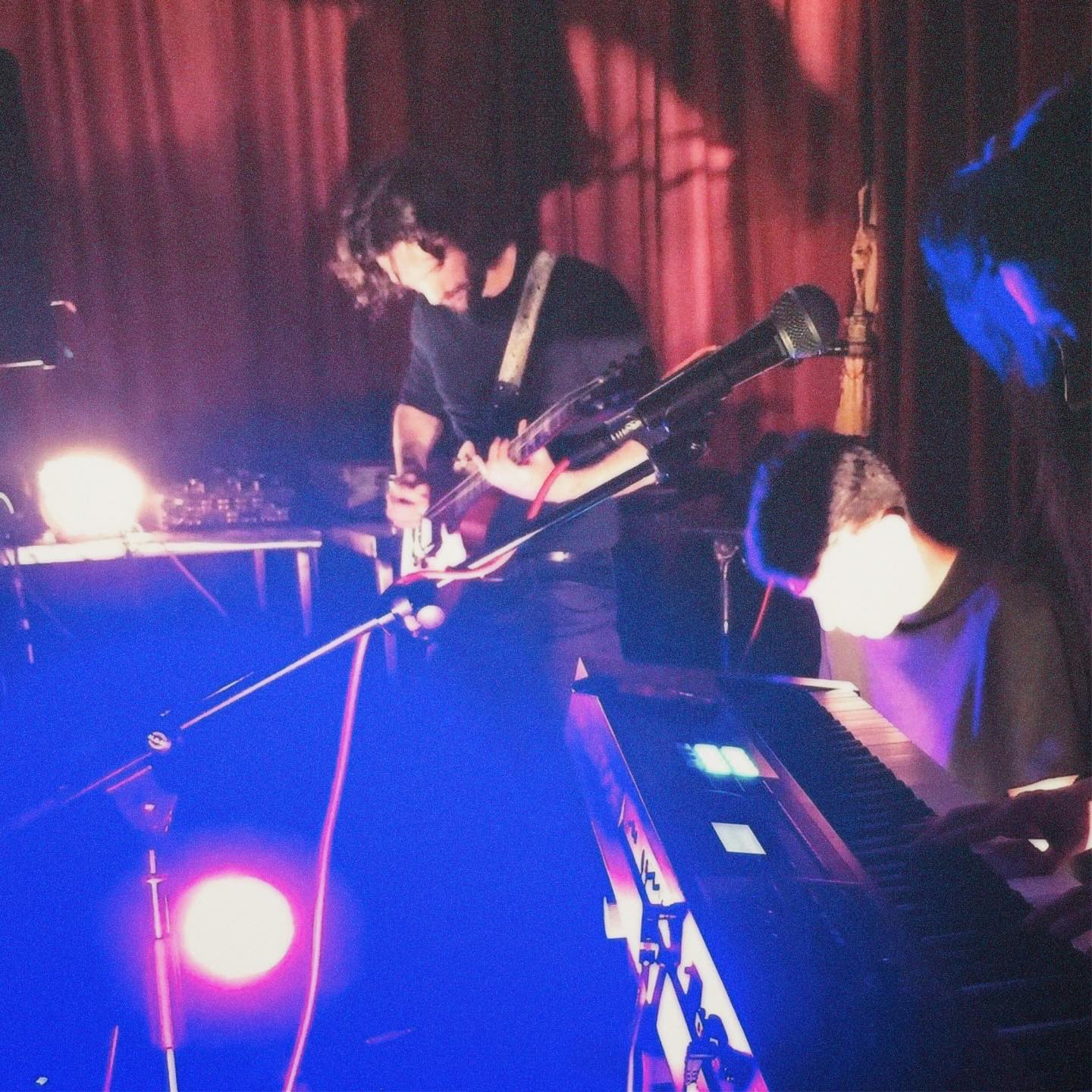
C: It was Sky Chariot who made an offhand quip on this regarding psychedelic music some years ago when we were having an informal jamming session. I instinctively agreed with their perspective; there’s many reasons we can attribute to why the spiritual element is missing but I’ll cite one: people will duplicate a sound or symbol without understanding why. So there’s this culture of opaque beliefs and expressions. It’s a bit like paisley shirts. The teardrop motif is a buta with its own spiritual significance but someone wearing a paisley shirt doesn’t necessarily know what that pattern represents. People imitate a sound or idea but it’s copying without knowing. At its worst, it’s vacuous. At its best, new meanings are born.
M: Would you say that music gives you a feeling of salvation?
C: Salvation, transcendence, mystery, reverence. Signals from the etheric realm. Music is both sacred and profane.
M: What would you say are your personal dreams for yourself and what you want to do surrounding music?
C: To have a new set of songs before the end of this year and to record them as an EP or LP. Sometimes people ask me to tour in their country and I’d like to be able to say yes to that one day. But it’s important to me to do it exactly in the way I’m happy with it even if it makes it less accessible.
M: I think it’s great that you seem to want to do it all yourself.
C: One of the most amazing things about being D.I.Y is, it’s raw. Music that’s sold on a mass level from major labels [like Universal, Sony] passes through so many people. You might have eight people working on one song. The actual person isn’t there anymore. The result is a carefully orchestrated icon in a media spectacle.
M: Would you say it takes a great deal of vulnerability to invest in the underground the way that you do?
C: Absolutely. Because if you perform in that way, you’re exposing your soul to everybody who you are in that exact moment.
Bandcamp: Weisskalt Records
 Dave Bixby
One thought on “Cyllan Wednesday Interview by Madison McLean”