
Toronto-based eclectic band Secular Pains opens up about their musical evolution following the re-release of their first three albums. Their sound delves into the shadows and emotional depths of the human experience, exploring how a profound loss can lead to a dramatic reevaluation of one’s faith. In addition to reflecting on their past work, the band shares insights into their upcoming musical projects and relocating to Guatemala.
Tell us a little bit about the origin of Secular Pains. When did you start performing or recording under the name Secular Pains?
Secular Pains: I formed Secular Pains around 2012 or 2013. I was going for a new sound and obviously, you know, you gotta have a new image when you have a new sound. They kind of go together. Otherwise you’re gonna start to fall into old habits. So, I got rid of my name, stopped doing my own independent stuff and went with the name Secular Pains.
What’s the meaning behind the name Secular Pains? How would you describe a Secular Pain?
SP: It does have meaning. I was still very religious back then. The name Secular Pains was actually a comment on the secularization of society and the pain that it gave me. Something like that.
Was it a reference to C.S. Lewis’ The Problem of Pain?
SP: Well, that was the album that I had done before. That was kind of like the bridge between me releasing stuff under my own name to performing under Secular Pains. In between, I did that project called The Hound Dog King, which was basically an album based around the book, The Problem of Pain by C.S. Lewis. Ultimately, it’s a very Christian album because it’s based around the themes of this Christian book.
Have you read his book Till We Have Faces? It’s one of my favorite books. It’s a retelling of the myth of Psyche.
SP: I have not. That sounds interesting.
I forgot that album was under the Hound Dog King. I was thinking that was a Secular Pains album.
SP: But it’s something I never thought about given that the album before is based around pain, right? And the concept of pain and how God could allow pain in his creation if he loves us, right? So then to actually create my band name with the word “pain”. It obviously has to have some subconscious connection.
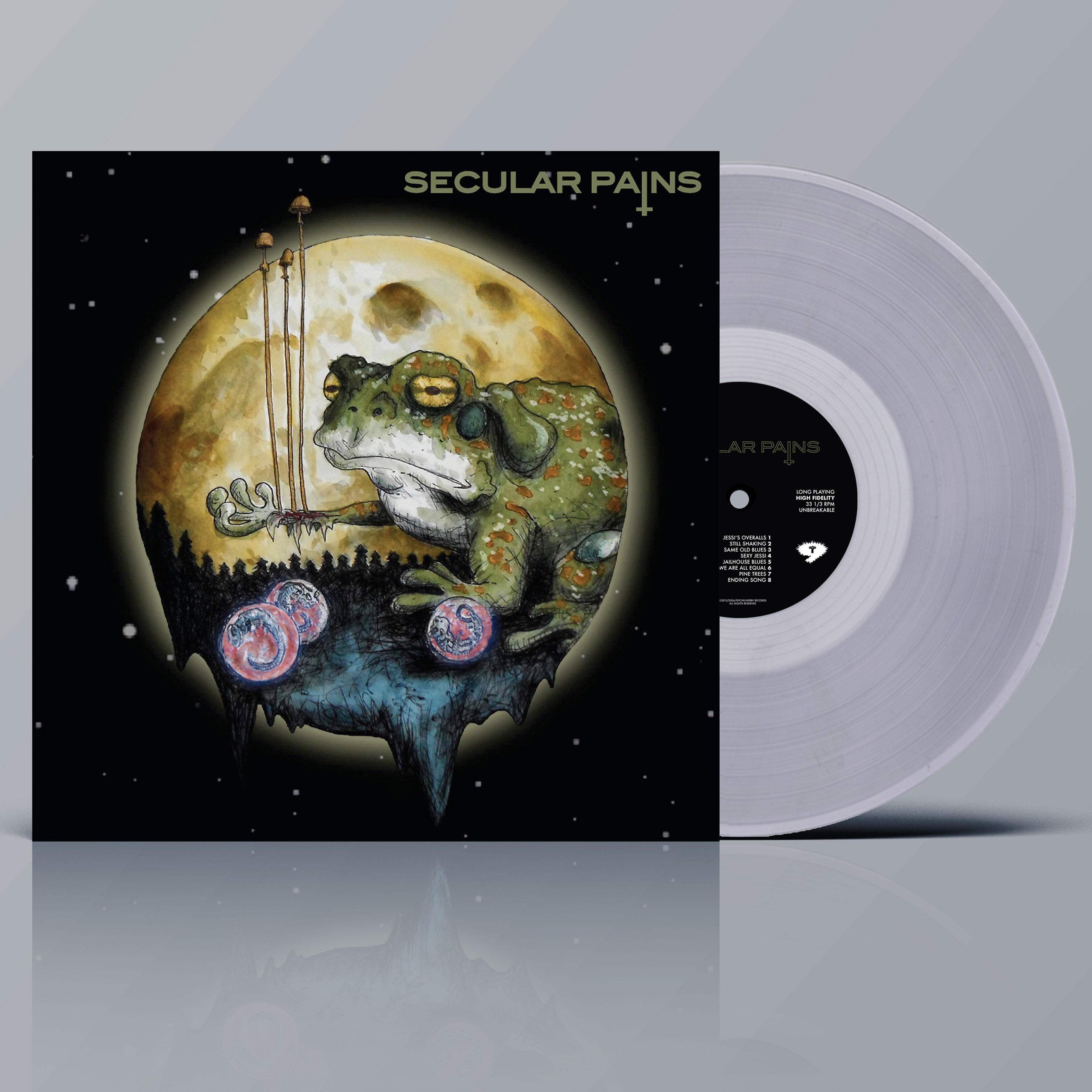
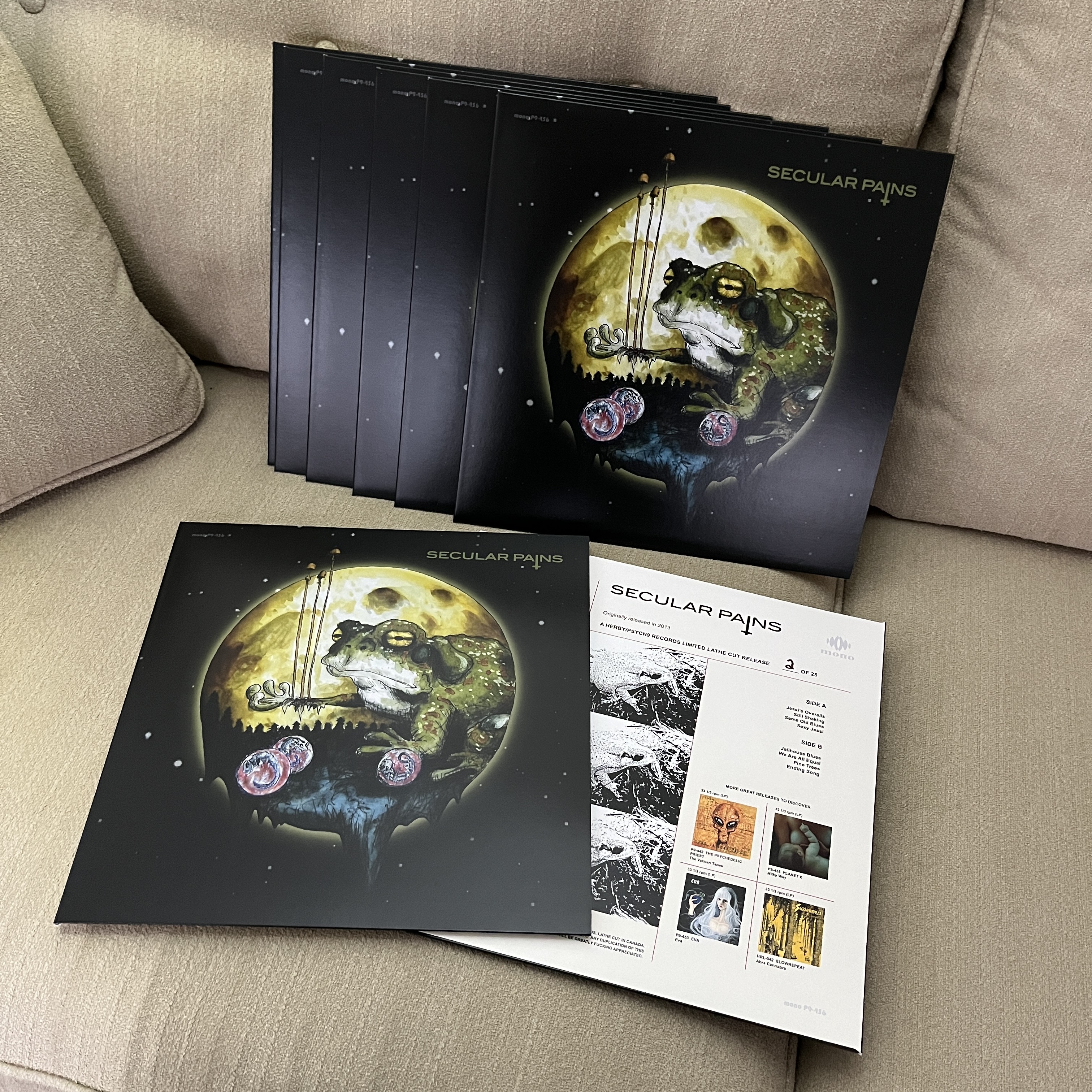
What were some of your key concepts or ideas on that first Secular Pains album?
SP: I didn’t go into recording it with any kind of concept in mind, really. It was a fleet of the moment kind of project, and it was the first album that I ever wrote and recorded in a short amount of time. Before that, I usually took my time. I wrote songs, I crafted them and then recorded them and mixed them. The course of an album would take about a year. But this, I did in three days and ever since, I found that it really worked for me. So almost every album I’ve done from that point on, I’ve completed in about a week’s time. I book myself in the studio, I lock out the rest of the world and I just write and record and whatever comes out is the album. I like that because it also captures a still frame of where I was at that moment instead of all these other influences which can, you know, change the music and change the themes and the moods. But with this album, I was trying to be pretty raw. I was toning it down on the instrumentation. I just wanted it to be pretty raw. Guitar, bass, drums. I didn’t even do any guitar solos on this album because I didn’t want them. I wanted it to be more Ramones-esque in style. It doesn’t sound like the Ramones but, you know, simplicity-wise I wanted a simple rock style.
I know that you are a trained violinist. I was curious to hear more about that.
SP: Yeah. I started playing violin when I was three. My mom encouraged me. I studied classical violin up until I was 18. It’s influenced everything I’ve done in life.
There are several covers on the second Secular Pains album. Why did you choose those particular songs to cover?
SP: Well, I love covers and I miss hearing albums nowadays from new artists who do covers. I don’t know, it seemed like back in the day, any Stones album or Animals album or Beatles album, there were covers on there, right? That’s the thing. It’s like a community of music. You play other people’s songs and you do it your own way. I always liked that concept. Why did I choose those covers for the second album? Let’s see, I did a Dylan song. ‘All I Really Wanna Do’, and I did a Buddy Holly song, and I did ‘Always on My Mind’. With the Dylan song, I had been dating a girl and I had sent her all this music and she said everything I sent her was shit. I sent her beautiful, poetic music like Leonard Cohen. She said “this guy is an idiot”. But then I sent her this Dylan song and she loved the words and said, “this is what I want to hear” and it related to the relationship as well. Anyway, I also had some connections to her while I was recording the album. So, I put that song on the album just for that reason. Thematically, it doesn’t really relate to the rest of the album. ‘True Love Ways’, I guess it was kind of like a new discovery for me with that song. For some reason I took a liking to it. But it’s also about the concept of true love and the second Secular Pains album I wrote for my wife after she died. I think lyrically, ‘Always on My Mind’ is pretty obvious. Elvis was always my favorite. Actually, on the first Secular Pains album, ‘Jailhouse Blues’ was actually modeled after ‘Hard Headed Woman’ by Elvis Presley. You could almost just take out the words and, you know, exchange them and be the same.
Elvis is your favorite?
SP: Yeah. Growing up, he was definitely my first love as far as rock and roll goes.
Who is Jessi in ‘Jessi’s Overalls’?
SP: Everybody always asked me that question. It was just the name. It seemed to work. And I mentioned her in three different songs on that album. I’ve never known anyone named Jessi. Aside from the guy on Full House. But obviously it’s not about him. Although I did see Uncle Jesse play the drums live with the Beach Boys once. I didn’t know he played music at all, and he did a tour with the Beach Boys as their drummer.
You’re in the process of re-releasing some of your older albums. What can you tell us about that?
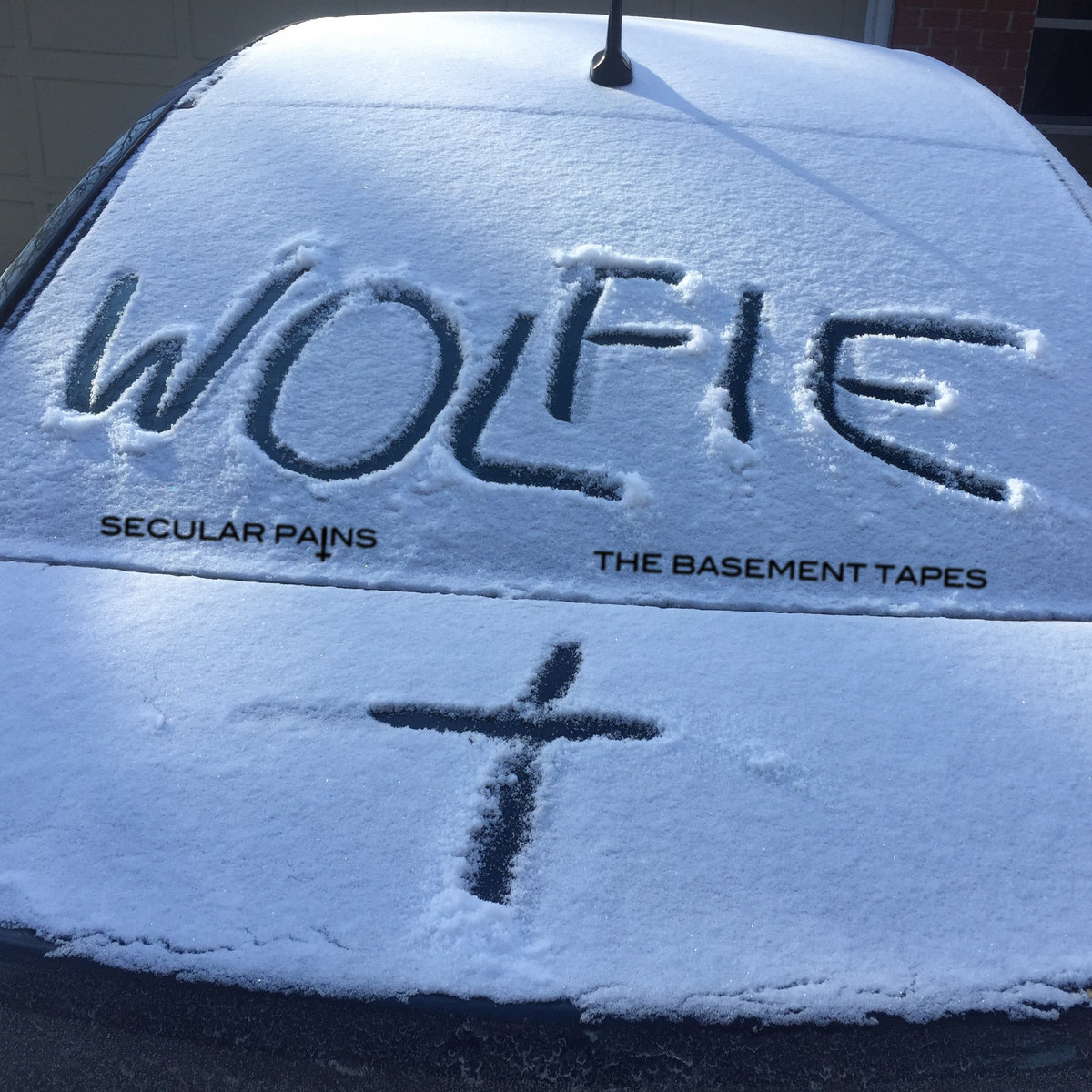
SP: Well, I thought it was about time to get these out in a physical format. The only album I had released in a physical format was the first album on CD. I’ve got the first album coming out in a couple of weeks which is exciting, Secular Pains II is set to come out shortly thereafter. And The Nursemaid, which is my latest release, to come out later this year. And I think that’s also going to spark some interest in releasing a new album as well.

You are moving to Guatemala soon. Are you going to record the new album there?
SP: Yeah, that’s the plan. I’ve got a studio there that I’ve worked at before and its basic but comfortable and I feel like I can work there. So, why not? That’s where I recorded The Nursemaid. I’m proud of that more so than the rest of the work I’ve done. So, yeah, I’m excited for something else.
Is The Nursemaid not on Bandcamp right now?
SP: I’m slowly trying to bring everything to Psych9 records on Bandcamp because I have a Secular Pains Bandcamp as well. I think I’m gonna put everything on Psych9 just because it’s so much easier to manage that way.
Oh yeah, that’s 19 tracks. Is that going to be a double or triple album?
SP: Yeah. I mean, ultimately if I ever wanted to get it pressed it would be a double album for sure, because I think it’s close to 80 minutes.
What led your progression from being overtly religious to the opposite of that or rather tapping into the darker side of things in your music?
SP: I think that’s a good way to put it – tapping into the darker side. Let’s maybe not see it as a progression from religious to anti-religious, but basically an exploration of both sides of the spectrum, right? Because, honestly, there’s nothing more religious thematically than a naked nun that’s in a crucifix pose, right? I mean, it is technically the theme of Christianity. It’s like it is a very negative spin on it but it still is centered around Christianity. As was The Nursemaid. Music, just like film, is an art and it’s a story. If a filmmaker or an author writes a story, whether they make a horrible horror film about somebody’s nightmare or an author writes about the most detestable character, nobody accuses them of being that character. But if a musician writes music that is nightmarish it’s somehow directly a reflection on the artist, right?
I was just going to say with writers, writing fiction, people often think you must have taken that from your life or some version of that happened to you, but that’s not necessarily always the case.
SP: Yeah. It’s probably easier to attach it because with music, there’s less people involved. And then the artist is actually physically singing and playing this music, right? So, it’s like you’re hearing that artist sing these things even though that artist just might be telling a story. Makes me think of one of my great influences, Alice Cooper.
Oh, really? That’s interesting. Why Alice Cooper?
SP: Well, for many reasons. I like his themes. Obviously, he has very dark themes, but also, the style of the music. I love his voice, but also it was show business, you know, very theatrical. When he makes an album about a serial killer it’s like he’s making a movie in album form.
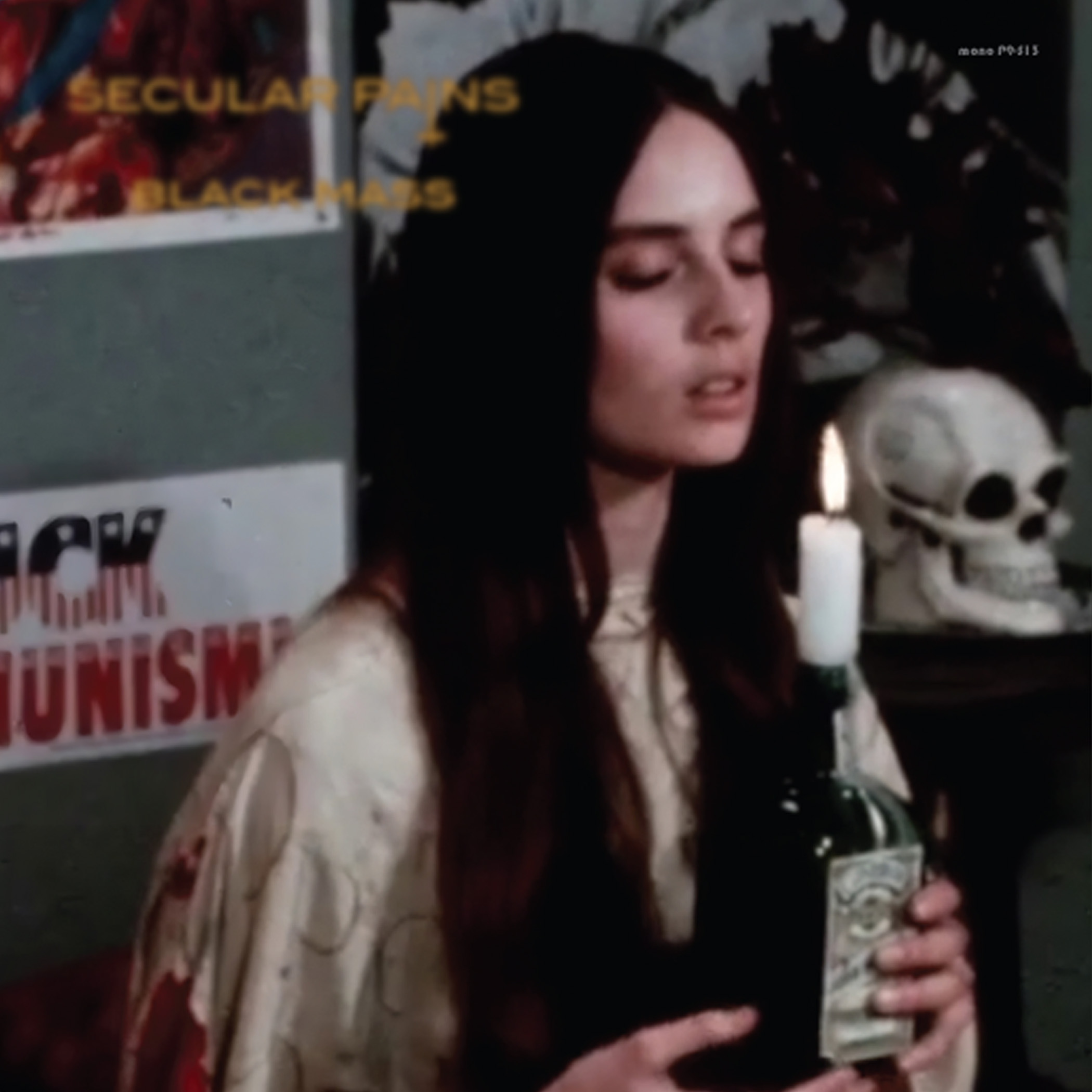
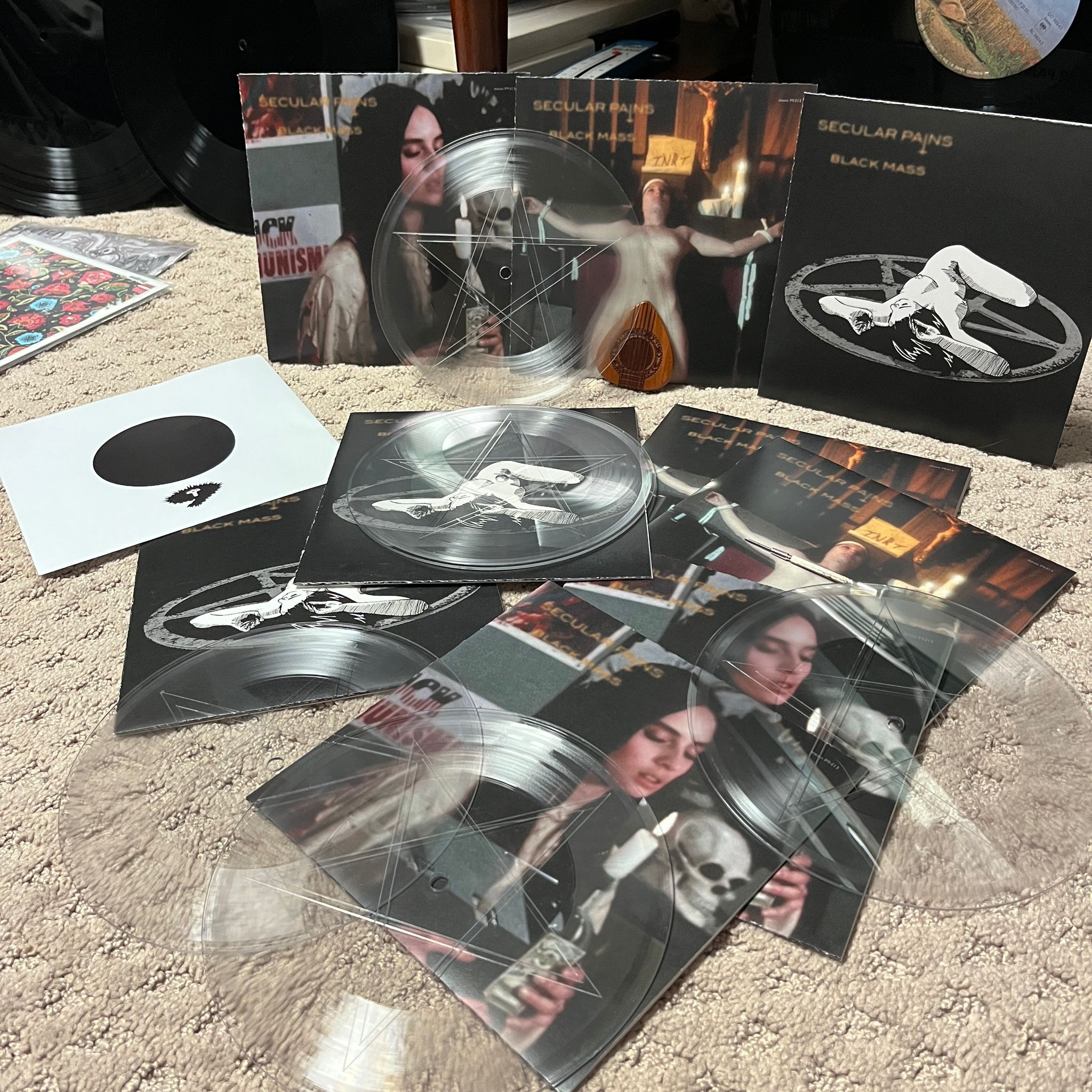

You were talking about the album cover of Black Mass, and that it’s not necessarily about moving away from religion but is it more of like a comment on your experience having been religious. Can you say more about that?
SP: So, yes, not to go too personal into it but yeah, maybe it’ll go too personal. Vanessa and her suicide. Obviously, this is a very crucial turning point in my life, right? So, the first album came before and then the second album came after and then everything has started to get heavier and darker in sound and in themes. The second album also touches on themes of suicide and death. And then the third album, The Nursemaid, goes even deeper and it introduces vampirism and giving up your innocence and death and there’s suicide in there too. There’s so many things and it’s all very, very dark. But I think that this is where I am inside—emotionally and spiritually, I’m in a very dark state. Not as in a depression or anything like that but exploring the concept of death and pain.
Were you raised Catholic?
SP: Yes. Hence the Vampires and Nuns. I remember reading this book the first time I went to Mexico, and I stayed on the beach for a month. I rented a little shack on the beach. This was a couple of years before I ever went to Guatemala, and I tried to write a book there. I wasn’t very successful, but I read this book. I have it right here and it’s called Flowers from Hell: A Satanic Reader. It’s excellent. But the thing is, they’re all Catholic writers. You read the introduction and I mean, it’s some New Satanism or something. But everything that’s in the book is Dante or Mark Twain. All these Catholic writers and it’s not pro-Satan, it’s just the concept of the devil because the only people who would write about Satan in classical times are Catholics. It’s kind of ironic, like reading this guy’s introduction and then reading these passages.
Do you think the new material will continue down this darker path? Or you’ll figure out when you’re in the studio?
SP: Well, that’s a good question. I think yes, being in the studio will determine a lot and how I’m feeling. I wanted to continue with the doom stuff and continue on this dark path because I haven’t finished exploring it yet. But at the same time, I’m starting to get little tugs from who I was before and who I think is really my true essence—being a hippie flower child. All peace and love, you know? Donovan and John Sebastian and all that. I do think that’s really my true nature, but that doesn’t mean that I can’t explore the dark side as well. Even Jesus, it’s believed, went to hell before he went back to heaven. So, yeah, chances are it may be horribly doomy and even darker in context and sound, or it might sound poetic and acoustic and all about peace and love. We’ll see.
What do you think about your exploration of the dark side?
SP: I think that it’s made everything in the light a little bit more defined, right? A little bit more outlined. Because I don’t think that you could just stay on one side and really gain an understanding of existence.
More of a balance.
SP: Yeah. Even though it’s very difficult to explore things on the dark side, I think it’s necessary if you’re going to reach certain enlightened states or however you want to put it.
Yeah, from talking to Dave Bixby, he refers to it as ‘the Void’, this dark place that people go through and that he had to go through when he had his religious crisis. You just have to go through it. You can’t go back. You have to go through the Void and to the other side, whatever that brings.”
SP: Yeah. Exactly. There’s always both sides to it. It’s not like the other side is lost. It’s just where you are right now and you’re right, you have to go through it, but you don’t have to succumb to it. You don’t have to become the Void. That certainly happens to a lot of people and we’re all prone to that happening.
Some people don’t get out of the void.
SP: No, definitely not.
I feel like, I don’t know and I could be wrong by saying that, but as someone who was raised Catholic, I feel like Catholicism lends itself more to the darker side. Original sin and then confessing your sins. I think there is something about Catholicism that somehow makes it more acceptable to explore a dark side. You go to a Protestant church, and everyone is so happy, or they’re pretending to be anyway, and growing up, it always struck me as odd. But no one is happy at a Catholic church. Do you remember your first confession?
SP: First confession? These are good questions. Not necessarily. No, I don’t think I remember the experience. Do you?
Yeah, I remember. I remember thinking I don’t know what to confess. I’m a kid. I have no clue what I should confess to this priest. So, I told him sometimes I talk back to my parents, and I take the Lord’s name in vain. And the priest said, “well, talking back to your parents is like talking back to God because your parents gave you life.” And then he told me to do three Hail Marys and two Our Fathers or whatever it was. I sat in a pew and did my penance and then I was done. It felt so silly.
SP: Did you go like frequently after that?
No, that was the only time.
SP: Oh, OK. Maybe that’s why you remember it then.
Yeah, probably.
SP: But I went to a lot more often, which is probably why I don’t remember my first one. Well, you got off easy because when you’re a teenager then you have to confess sexual sins. And that’s the hardest thing to do. I suppose that it does really touch on the concept of my relationship with God. I guess the whole progression of Secular Pains is if anything, a reflection on my relationship with God, you know?
– Noelle O’Donnell
Secular Pains CDs and Vinyl are available through Psych9 Records

 Dave Bixby