
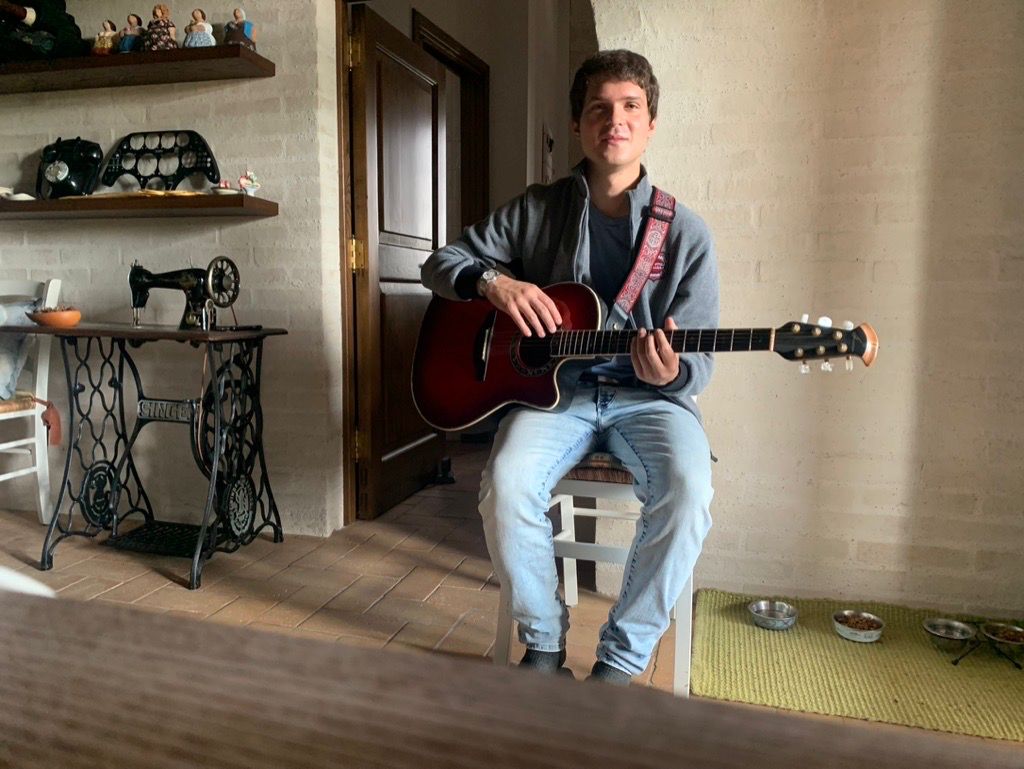
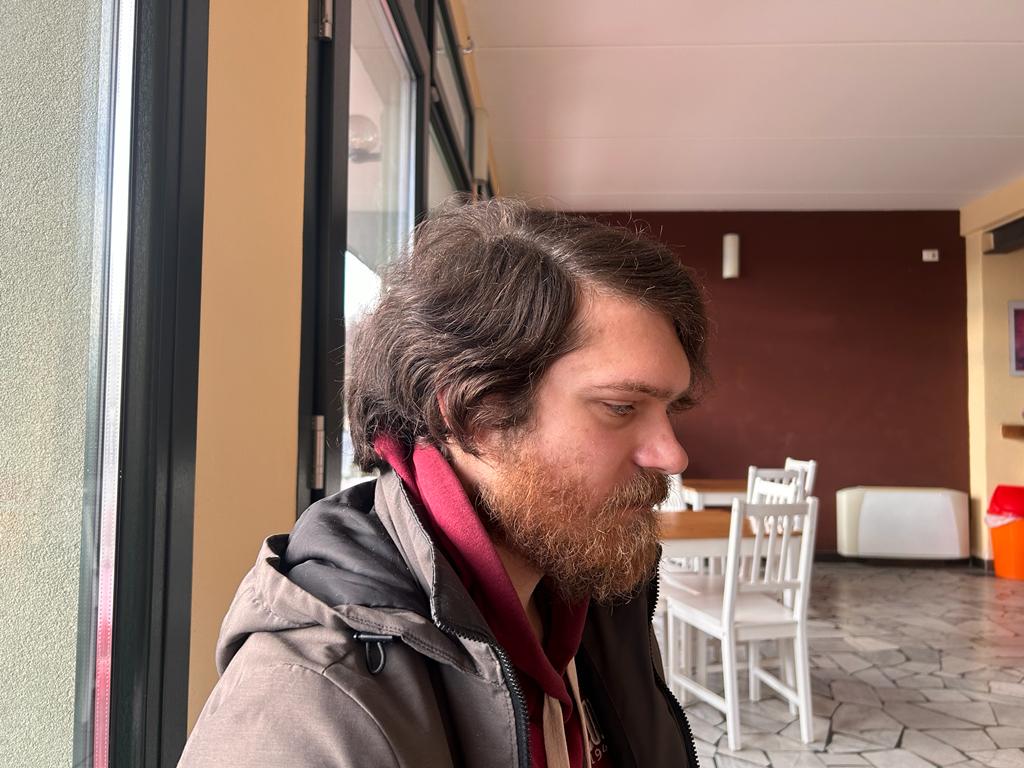
Alessandro Durante, 34, is an independent Italian musician with a gravitas philosophy towards inspiring creation. We speak here about the connections between formative experiences and psychedelic emotions, beginning to establish an illusive connection between religion, music, and drugs…
M: Hello. It’s lovely to speak.
A: Hello!
M: I’ve been looking forward to this. I apologize for any confusion with scheduling.
A: No problem.
M: Thank you. So, like I sent you, the first subject I would like to talk about is your
musical history? Where do you feel was your musical beginning?
A: My musical beginning started 20 years ago, more than 20 years ago because now I am 34 years old. I started at 11, more or less. I started with the keyboards at school, but later I changed to guitar with which I felt better and I continued until now.
M: Why do you think music first interested you?
A: It started like a passion. I don’t remember the moment when I felt that music would have become a part of me. But it began from my father, probably; he was my first music teacher. I began to play under his surveillance and supervision. I started to play guitar, the flute and also tried to sing over my songs. I don’t know why I felt attracted to those instruments. Maybe, because even though I was born in the nineties with the nineties music, when I was younger… I didn’t listen to commercial music. I listened more to underground music or the psychedelic music from the sixties, or the progressive and folk from England and Italy. I fell in love with these genres and I tried to emulate all these bands by playing my own music.
M: That’s beautiful. I think that’s how a lot of musicians start – honoring their favorite artists. Who do you think introduced you to underground music?
A: I went to a library and found a book called “Psychedelia.” It opened a whole world for me, introducing me to unknown musicians. And it was a kind of Bible for me, this book about psychedelia because, I should not say this but it also inspired me to use drugs sometimes… because that music is a kind of psychedelic experience.
M: Is that an experience you would have mostly by yourself or with others?
A: I don’t understand.
M: Would you usually experience psychedelic music by yourself or with others?

A: I had my first band in 2005, 2006, if I remember well, and we were called “Lost Strange Dreams,” like LSD.
M: (exclaims happily)
A: With them, I started to create my own sound, which was, in fact, inspired by psychedelic experiences and psychedelic music.
M: How would you describe the music you’re making now?
A: But now I’m not making music. I mean in the present. But I recorded my last album in August or September of last year. I don’t remember exactly. I stopped with it because when I record something, I need to find a particular inspiration. Now at the moment, I have no new ideas. I think I have put a lot of original efforts in my past works.
M: Do you like to go to the library for inspiration?
A: Yes, I read a lot of books.
M: Do you feel like most of your inspiration comes from books?
A: It’s a good question because I read more books than I listen to music. You understand what I mean? I remember the last album I heard was the first album by ‘Gentle Giant,’ but it was a couple of months ago. I prefer literature to music. Music is my way to express myself. I think that the best works of creativity are books
M: You bring up your father, is your family a big part of your music?
A: Yes. Yes. My family always gave me the opportunity to play. I studied in a music school for 10 years. My parents paid for the school and were happy to see that I loved what I studied.
M: Yes. Did you ask them to go to music school or was that something they decided?
A: We decided together because I was very young. It’s difficult at that age to make these
decisions alone.
M: Perfect. So you had encouraging parents.
A: Yes. A big part of my inspiration comes from my religion, my religious faith. I am a religious person. I feel myself a Christian. And that, for me, is a push of encouragement, like my parents.
M: Did you feel like you heard music in the church that influences how your music
sounds?
A: Yes, I think that church music is for me an inspiration, especially on the organ.
M: Did you have encouraging friends?
A: Yes, luckily. This band when I was a teenager, we were four. I played the guitar. Then there were bass player, drum player, and singer, female singer, and that gave me a push to start my own solo music projects, which I am still doing. We played punk and ska music… There are still some very old videos of us playing this music on YouTube. I was inspired by participation in the band.
M: How did you meet your bandmates?
A: I met the bass player in the music school and then, the other members were friends of ours.
M: Did you guys have any creative disagreements?
A: Yes. Yes, we had them and. In fact, we stopped playing together around 2009/2010, because everyone had different ideas about music. I was, let me say, more ambitious because I wanted to play more complicated music. I don’t say that I don’t like those genres, I do like them, but when I play my music, I prefer to do other things.
M: The passion for music still remained even though you had disagreements?
A: Yes. Yes. The passion remained and I was also in another band after this one, which was more close to my inspirations. My last musical collaboration was with a Spanish musician called “Iker.” His band is called the ‘Sugaar Pan.’
M: Was the music sweet?
A: The music was a kind of ambient music, folk music, with elements of kraut rock, the music from Germany.
M: What is your favorite project you’ve ever done?
A: Probably this one, with the Spanish musician because it gave me the opportunity to be very creative, without limits, without disagreements.
M: Hmm. That’s an important part of psychedelic music. Do you feel like it can be limitless in terms of creativity?
A: Yes. When I record my own music, maybe sometimes I think, it could sound something like “easy” but, it’s not easy. I try to not put limits when I record something.
M: What do you think are the difficulties you face with music?
A: The first difficulty is technical difficulty. The difficulties, yes, the technical difficulty and then the expressive difficulty because I am not really a good singer, but I try to be. And when I sing, the important thing for me is to do it with passion. I want to transmit this passion when I sing by making my voice vibrate. Then of course, there is the difficulty to compose a song which is not already heard. I try to always make something which could sound new. I can do it.
M: When did you first come into contact with David Bixby?
A: I published an EP 45 RPM record with Herby Records. Justin of Herby Records suggested I try to get an interview with David Bixby and I listened to his album, “Ode to Quetzalcoatl” and I really liked it. Very relaxing and very good to listen to.
M: Did you have a favorite song?
A: I’m not good at remembering the song titles… not only with David but with all the bands. I remember just one title: “Drug Song.”
M: That’s the one I was going to bring up. Many people email David because they have experiences with psychedelic music and using drugs and often they are pretty sad about the combination of those experiences. That song encapsulates a lot of that sadness in a beautiful way. Is that how you feel?
A: Yes. Yes.
M: What do you think is the relationship for you between music and some of the sadness you’ve experienced in life?
A: Hmm. When I make psychedelic music, when everyone makes psychedelic music,
psychedelia is another thing in another universe. I personally, maybe I should not say this but, I prefer the silence to music because the silence is really cool. Music is a kind of a noise, even if it’s good. With the music you can try to express the feelings you feel when you are under psychedelic substances but you cannot substitute music with drugs. I think there are two different worlds
M: But you think both can help with your emotions?
A: Yes. Yes. Without drugs, music does a good work for emotions.
M: Does music ever make you feel like you’re on drugs?
A: Yes. Maybe classical music is close to that. In fact, I didn’t say it before, but my favorite music is classical music, especially Bach, Vivaldi, Scarlatti. That music is probably the best music about emotions, and also about psychedelic feelings.
M: I like that. I think music has a helpful relationship with emotions. What are some of the themes that you particularly like in your music?
A: Well, when I create music, I always think that if someone would cry by listening to it, it would be perfect, but I don’t think that anyone will cry listening to my music.
M: Why do you think no one will cry listening to your music?
A: Because no one listens to my music. I have not so many fans. Maybe, thanks to you, I will be more exposed.
M: Yes. How important is it to you that other people listen to what you make?
A: Well, for me, it’s not important that many people listen to what I do. I don’t create music for the mass. If I will be able to reach even one person, that I would really like. I would be satisfied.
M: Do you think that has happened? Do you think you have reached people?
A: No, not yet. Not yet.
M: Ah, well, I think you’re reaching me.
A: Oh, yeah.
M: I recently spoke with someone from Australia (Cyllan Wednesday) and they value the underground music community. It’s not about the amount of people but about the ethics and the values behind the music. Is that something you can relate to?
A: Yes. Yes.
M: Do you think you express a personal philosophy in your music?
A: I think my life is a little bit complicated and I try to express this complication in music.
M: I think that’s fair. What are some of your musical goals? Do you have any?
A: Yes – to record an album without mistakes. I make a lot of mistakes and then when I listen to what I do, I hear just the wrong things. I try always to be perfect, but perfection doesn’t exist or maybe doesn’t exist for me.
M: I think perfection is a destination that one never reaches but can walk towards.
A: Yes, this is my philosophy.
M: What do you think you will do to make a perfect album?
A: I think I will try to involve more people in my projects because, if I do it all alone, I have to play all the instruments and, of course, I’m not good with all the instruments. But with more people collaborating with me, that would be a possibility of reaching perfection.
M: I think it’s important to bring other people into the feeling of perfection. I really like hearing that. Do you like to perform live?
A: Yes. I used to perform with the “Lost Strange Dreams” several times in Milan. I was born in Milan, lived there until I was 28 years old. Yes. We played many stages. For me, it is important to do live music. Live music is better than studio music. Maybe one goal I have would be to start again, to play in local pubs, or anywhere.
M: Why do you feel that is important?
A: Because there are no tricks when you play in front of an audience. There is just you and the audience. You cannot repeat, you have just one possibility to perform, and this is for me, a great purpose. You have only one attempt to reach perfection. And if you arrive to play this perfection, then you have reached your highest conditions.
M: Ah, I think that’s amazing.
A: Yes, it is.
M: So, music still amazes you.
A: Yes. Yes, it still amazes me.
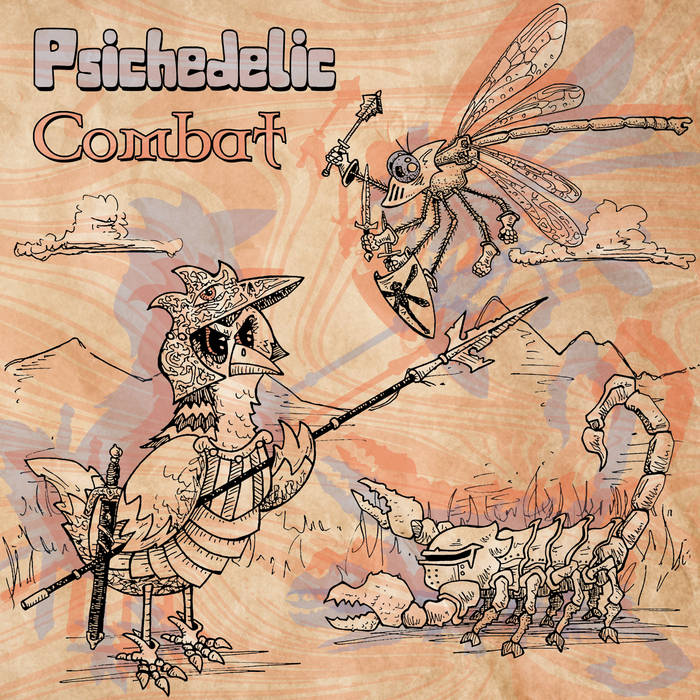
M: What do you like about the record with Herby Records?
A: I like the cover art for which it was made. It’s the first time that someone has made a cover art for my music. I am very grateful to Justin Jackley for it. He did a great job and then, it’s exciting to see a concrete product of my music. Other things I recorded are digital files. My record with Herby Records is called “The Combat.” It’s the first time that I can touch what I did with my hands.
M: Is there something you really want people to know about you and your music?
A: I just want people to listen to my music.
Check out Alessandro’s bandcamp: https://zoraegliibernauti.bandcamp.com
 Dave Bixby