
Interview by Tomoyuki Yamazaki – Tokyo, Japan
https://news.yahoo.co.jp/expert/articles/9bd208e7b6ce278a687c5c2b57b417a9722dd06a
Dave Bixby’s “Ode To Quetzalcoatl” (1969), known as a “phantom” American cult folk album, and his band Harbinger’s “Second Coming” (1970) were released as Japanese CDs in June 2025.
These two albums, which have become legendary as extremely rare and treasured psychedelic folk albums (the original LPs were privately pressed with only 500 copies each), are downer, acid-fueled folk trip experiences that depict his experiences with drugs, joining a cult, and feelings of alienation. The album features evocative titles such as “Drug Song,” “666,” and “Cosmic Energy.”
In recent years, Travis Scott has sampled “Drug Song” on his album “Parasail” (2023), gaining mainstream support. In this article, we interview Dave Bixby to find out the full story.
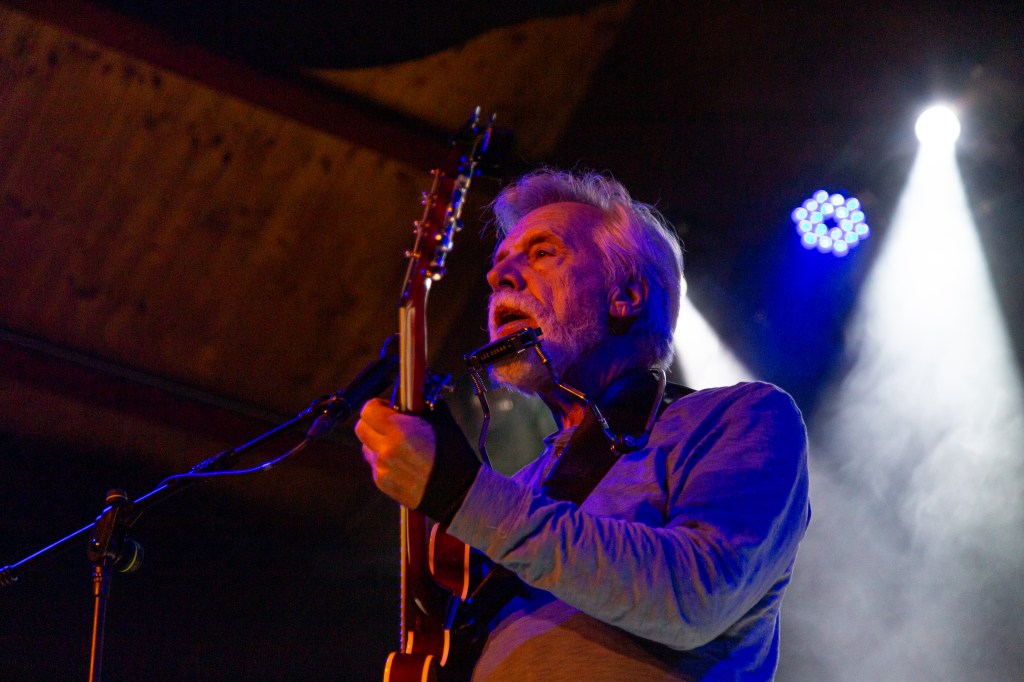
Dave, now 75 years old, spoke eloquently about his music and its spirituality.
Your albums released in 1969 and 1970 will be released in Japan in 2025. What are your thoughts on that?
The recognition these two albums have received is beyond my comprehension. When they were released, I was in a religious group called “The Group.” You could call it a cult. I was supported by a community of several hundred people, and for a time, I was happy. But then I left the group and was forgotten for a long time, until I was “rediscovered” in 2009. Since then, slowly but surely, I’ve gained a following. 50 years after releasing the album, I’ve performed live in Europe, and now my CD is being released in Japan—it’s like something out of a fantasy. I’m happy.
What do you think is the reason for this reevaluation?
I think the influence of the internet is a big factor. Word spread, and I started receiving messages from all over the world saying, “They listened to my album.” When teenagers tell me, “I’ve been liberated from the darkness in my heart,” it makes me feel like I’ve done the right thing. I was about the same age as these guys when I made these albums. The struggles of a boy becoming a man are common in every era. Young people today come to me, knowing that someone 50 years ago had the same struggles. I’ve tried to respond to their concerns as much as I can. I never try to give them advice; I just listen. Talking to someone helps them feel better.
Ode to Quetzalcoatl is a kind of odyssey about drug experiences, finding God, and alienation. Is all of this actually anger, or are some of it dramatic?
It’s all true. I use poetic expressions, but there’s no fiction. It’s what I felt and what I’ve been searching for spiritually. “Ode to Quetzalcoatl” was a work that depicted a search for the soul. “Soul searching” isn’t meant to be entertaining. But there were listeners who shared that feeling, and there are still people who resonate with it today. It’s amazing that even after more than 50 years, there are people all over the world who are still moved by my music. When I discovered LSD, I believed it was something like an encounter with God. But I was wrong. So, in my search for truth, I came across a cult called “The Group.” I believed that prayer would bring me closer to the answers I was seeking. I made new friends, but at the cost of losing many. In the end, the cult had nothing to do with God; it was just a system that served their own purposes.
Why did you dedicate “Ode to Quetzalcoatl” to the Mexican god Quetzalcoatl even though you were in a Christian cult?
I avoided naming the album after a Christian-inspired title, since it conflicted with the doctrines of the Christian church at the time. So I decided to name it after Quetzalcoatl. He was a god of the ancient Mexican Toltec civilization. No one knows his real name. Quetzalcoatl was named after the quetzal, a bird of the trogon family. He was said to have been able to fly and to have taught humans how to heal illnesses. He had many similarities with Jesus. He was also said to have been a quiet person, like Jesus. He symbolized philanthropy, similar to Gandhi and the Dalai Lama. However, before the rise of the Aztec Empire, Quetzalcoatl suddenly disappeared, and the Aztec people waited for his return. When the Spanish conquistador Cortes visited the Aztecs, he was greeted by people who believed the prophecy that Quetzalcoatl would one day return had come true, and the empire was invaded. I was deeply moved by my visit to the Quetzalcoatl Temple in Mexico City and meditated there, and the word Quetzalcoatl has a mystical ring to it for English speakers, so I thought it would be a perfect title.
What was the inspiration for the music in “Ode to Quetzalcoatl”?
At the time, I was influenced by The Beatles, Bob Dylan, and the Moody Blues. The Moody Blues were especially influential to me. They explored metaphysical themes, including Merlin and King Arthur, myths and legends from around the world, spirituality, meditation, Eastern philosophy, and Christianity. They were the only ones who combined rock and roll with an orchestra in that way. I also had an orchestra playing in my head when I wrote songs. When I heard about reissuing the album, I listened to it again. It’s been 40 years since I recorded it, so I was able to listen to it objectively, but I realized that it was mostly just guitar and vocals, and I needed to develop it more musically. Maybe add strings or timpani, perhaps. I was initially hesitant about reissuing it. My time with the cult was negative and unhealthy, and I didn’t have any good memories. Toward the end, I felt like I had gone to hell. But if we were to re-record the music from that time, the atmosphere of that era would be lost, so we decided to release it as it was.
What is the meaning behind the album cover?
The cover of “Ode to Quetzalcoatl” depicts living in this world. Life is full of suffering and trouble. I expressed this with monochrome artwork featuring the god Quetzalcoatl. I didn’t want the artwork to look like Jesus Christ in a field of flowers. I wanted it to be more realistic. But for my next album, “Second Coming,” I used a field of flowers on the cover. Looking back, that might have been a mistake.
I heard that “Ode to Quetzalcoatl” was used to treat PTSD in Vietnam War veterans.
Many veterans also attended The Group’s meetings. Returning from war, they were traumatized, exhausted, and sometimes even suicidal. I spoke with their families and learned about the situations they faced. I played “Ode to Quetzalcoatl” for them and shared my own journey. A while later, I was summoned to the draft board. I told them about my life and played the album for them. Two officers, one male and one female, were so moved they hugged me and shook my hand. As a result, I was exempted from military service and assigned to provide therapy for veterans. I listened to people’s stories. It was a painful experience in itself, but I didn’t experience any physical pain. I was then drafted again. However, new deployments were canceled before I could be sent to war. If I had gone to war, I might have been killed. Even if I hadn’t, I wouldn’t have been able to endure the mental strain of shooting innocent villagers. Like the Korean War and the Gulf War, America kills innocent people every few years. Forced to do this, veterans turned to drugs or turned guns on themselves. Some fled to Canada, but lost their American citizenship. “Ode to Quetzalcoatl” became a form of therapy for them, and at the same time, it saved my own life.
The songs on “Second Coming” under the name of Harbinger were written around the same time as “Ode to Quetzalcoatl,” but the sound is quite different, more band-like. How did that change come about?
I had written about 30 songs around the same time. I recorded 12 of them as “Ode to Quetzalcoatl.” The rest, along with some new songs, became “Second Coming.” As I said earlier, I was inspired by the sound of the Moody Blues, adding an orchestra to electric rock and roll. “Ode to Quetzalcoatl” was recorded on a two-track in the living room of Don DeGraaf, the founder of The Group, so it was just guitar and vocals. I wasn’t able to realize my vision for “Second Coming” either, but I did have access to a professional recording studio, and I incorporated Brian McGuinness’ guitar and Sandy Johnson’s female vocals, giving it a more band-like approach. I felt that having the founder playing would have a stronger appeal to the followers, so I taught Don DeGraaf a quick bass lesson and had him play. I decided to treat it as the work of the band Don is a part of, rather than my solo work, and so we used the name Harbinger. For me, it was an even more uplifting album, knowing that I’m not alone in the universe. Tracks like “Cosmic Energy,” which sings of “cosmic energy,” and “Time To Clear Your Mind,” which encourages meditation, are examples of this.
“Second Coming” gives off a positive attitude, but it’s not all positive; like “Circus World,” it also contains critical messages.
Honestly, “Circus World” wasn’t a song that came from my heart. Criticizing the Christian church as a “circus world full of games and nursery rhymes” was a cult propaganda. It captures the process by which “The Group” became a cult. “Second Coming” had a false positivity, and I’m not proud of that. The cult’s tactics included apocalyptic theories. “666,” plagues, earthquakes, the end of the world… I personally believed in them, but they were also a way to lure people into religion by inciting fear. …Ironically, a few years ago, this became a reality with the pandemic. We had to wear masks, and we couldn’t even board airplanes unless we got a vaccine, even though we didn’t know what it contained. People became suspicious of each other, fearing they might transmit disease, and no one trusted each other. I started the “Harbinger” web magazine primarily because I wanted to help young musicians who were no longer able to perform live.
Why did you leave “The Group”?
“The Group” was a ship sailing out to sea, and Don DeGraaf was its captain. But a rebellion broke out on that ship. Over time, many members of the cult left. Some returned to Christian churches, while others lost interest in religion altogether. The people I had believed were my allies were no longer my friends. Leaving them and going it alone brought anxiety and fear. Unlike alcohol or drug rehabilitation programs, there were no rehabilitation programs. But being alone also meant freedom. So I left my past behind and moved on with my life. Since then, I’ve attended churches of many different denominations, and I’ve been amazed at how each one interprets the Bible differently. To put it bluntly, they twist it to suit their own purposes. Even the apostles in the Bible make mistakes. Peter made the biggest mistake of all by betraying Jesus. Ultimately, we have no choice but to trust our hearts, but we don’t know if that’s true. We have no choice but to keep asking ourselves questions. Would we stone a woman caught in adultery? Would we forgive her? When asked, “Let him who is without sin cast the first stone,” Jesus replied, “Let him who is without sin cast the first stone.” Things are not always black and white. Even in Buddhism, there is the idea of a “middle way.” But ultimately, the path you take is up to you to choose. In the 1960s, comedian Flip Wilson’s catchphrase was, “The devil made me do it!” But decisions are not made by the devil. You should make the choice yourself. Life is a series of choices.
Do you still have the original LP pressings of the two albums?
No, I left the cult after realizing there were some inaccurate aspects to their teachings, and left the music of that time behind. For the next 40 years, I never listened to the records I wrote back then, nor did I perform them. I wanted to distance myself from the music of that time, so I left them all behind. Maybe a member of the cult at the time took them home and sold them on an online auction site much later (wry smile). Some acquaintances sent them to me, and now I have two of each. This reissue was transcribed and remastered from an LP I own. I know the original LP is incredibly hard to come by. It’s strange that I went to so much trouble to sell it when it was released (laughs). I once heard it was sold for $2,000 in Japan. I wish I’d kept at least a cardboard box! …I thought.
How did you find out that your music is still being listened to today?
Sometime in the early 21st century, I was talking to a journalist in California and he told me to search my name online. I discovered that “Ode to Quetzalcoatl” is still being listened to today. I remember 500 copies of the LP arriving in my bedroom and wondering, “What am I going to do with these?” There was no distribution or sales network, and I was selling them by hand at cult meetings. It was a strange feeling: “Are they collector’s items?” The stories I was singing were about protagonists searching for their place in the world. I was still a boy, trying to grow up. But I struggled, unable to find my path. There were many young people like me in America, with parents away from home to guide and steer us in the right direction. I too had walked a winding path, unsure of what to do with my life. These two albums depict those days.
Popular rapper Travis Scott’s sampling of “Drug Song” in his album “Parasail” (2023) caused quite a stir, but how did that come about? What impact did it have on your music career?
Originally, rapper A$AP Rocky discovered “Ode to Quetzalcoatl” on Bandcamp and sampled “Morning Sun” on his album “Calldrops” (2018). Travis heard it and jumped on the bandwagon and sampled “Drug Sing.” Thanks to them, I was able to pay off the mortgage on my house, but I didn’t become particularly famous. I still live a normal life.
You currently live in Arizona. Do your neighbors know who you are?
I live in a small town called Williams in northern Arizona, at the entrance to the Grand Canyon. It’s 7,000 feet above ground, where the air is clean and there are lots of pine trees. I work in a home studio, but the people around me don’t know what I do. When I was touring in Europe, I asked them to look after my dog, and they said, “Are you traveling? That’s cool.” (laughs)
What is your daily routine like?
I live in a remote area, so the only times I talk to people are when I go shopping for necessities or to the post office. When I was younger, I cut myself off from society and didn’t talk to anyone for a year or two. I also enjoy walking alone in the forest, so I don’t mind it that much. But sometimes communicating with others teaches me a lot. Sharing my ideas and thoughts with others helps me stay sane (laughs). The important thing is to have peace of mind. We go about our daily lives, performing various actions. But we should be at peace inside, contemplating life, looking at where we are and where we’re heading.
How many performances have you performed outside of the United States?
My first trip was to Copenhagen in 2018. I was shocked to find out I had fans in Denmark and they invited me to play a show. A fan from Cologne, Germany, was there, and we started exchanging messages. They arranged a European tour for me in 2023. I went to the UK, Germany, Belgium, and the Netherlands. I traveled by train and taxi, and each show was a club-sized event with 100-200 people, but the audience was so excited about my music, it was a wonderful experience. Then, last March (2024), I did a show in Spain as a showcase for Guelsen Records, who reissued my album. I went to their office and met all the staff, and it was a very warm and welcoming experience. I’m usually nervous on stage, but this time I was able to relax and enjoy myself while performing.
How do audience reactions differ in America and Europe?
In America, people tend to jump on popular songs. But in Europe, even music that doesn’t get radio play can build a dedicated fanbase. Musicians can perform at their best when they’re in front of an audience with an adventurous and respectful spirit. European listeners are interested not just in the music, but in the stories behind it. I’m a folk singer, so I played songs incorporating lyrics and my own life stories. What’s interesting is that sometimes the meaning I put into my lyrics differs from how listeners interpret them. It’s not that they’re wrong; it’s just a different interpretation, but it was very refreshing and a great discovery for me. I’d love to perform live in Europe and Japan again.
Is your latest work currently “Terrafirma (Welcome To Earth)” released in 2024? What kind of musical activities have you been involved in recently?
That’s right, Terrafirma is my latest album. That said, I’m always writing new music; it just takes time to finish them and record them in my home studio. My voice is gradually losing power and volume, so I want to record as much material as I can while I can. I don’t have a firm schedule yet, but I definitely plan to release a new album. I also plan to release an album with Harbinger Orchestra, a project in which I record tracks with musicians I’ve met online. My musical journey has been a process of trying to go from being a taker to being a giver. We’re all born as takers. We try to own our mother’s breast and fight over toys. But as we grow, we begin to value giving. I introduce young musicians through the Harbinger web magazine , and I’m trying to give in my own way. I hope to continue giving to people around the world through my music.

